Skip to content
Toledo Foundation

Serving Toledo and nearby areas

Stair-Step Cracks in Block Walls in Toledo, OH

A stair-step crack in a block foundation wall means part of the wall has moved, and a free inspection tells you whether it is old settling or a wall that is still on the move.

Book a free foundation inspection

Tell us what you are seeing. A local specialist calls you back the same business day.

Local to Toledo

We connect property owners in Toledo and nearby areas, including Old West End, Point Place, Sylvania, Ottawa Hills, Maumee and Perrysburg, with one independent local foundation repair specialist.

  • Wet lake-bed clay

    USDA describes Toledo series soil as clay from old lake sediments, very poorly drained, with slow permeability. Water sits in it for months.

  • Freeze and thaw every winter

    Lucas County sets the frost line at 36 inches and lists an air freezing index of 1,500 degree days. That is a lot of freezing next to the top of a wall.

  • Old mortar

    About 31 percent of Toledo homes were built before 1940. Mortar that old can be soft and crumbly.

What it costs

Typical published ranges for Toledo. The contractor's written estimate is the price, and the inspection is free.

WorkTypical range
Inspection and written estimate Free
Crack sealing or repair $200 to $1,000
Repointing mortar joints, walls up to 8 feet $5 to $10per square foot
Wall anchor, if the wall is also bowing $400 to $1,000each
Pier, if a corner has settled $1,000 to $3,000each

See typical foundation repair prices in Toledo

What a stair-step crack looks like

A block or brick wall is made of units held together by mortar. The mortar is the weak part. So when the wall moves, the crack follows the mortar joints, going sideways along one row, then down one block, then sideways again. It looks like a staircase.

Here is what to look for:

A zigzag crack

Running down at an angle, often from a corner or a basement window.

Wider at one end

A crack that is wider at the top than the bottom, or the other way around, shows which way the wall moved.

Blocks out of line

The blocks on one side of the crack sit a little in or out from the blocks on the other side.

Loose or sandy mortar

Along the crack that crumbles when you rub it.

Matching cracks outside

The same zigzag shows on the outside wall or in brick above it.

Water or a white crust

Along the crack after rain.

Why they show up in Toledo

Most of Toledo sits on old lake-bed clay from glacial Lake Maumee. USDA says the local Toledo soil is very poorly drained and stays wet for much of the year. Wet clay is heavy, and it leans on basement walls for much of the year.

Winter adds more. Lucas County puts the frost line at 36 inches, and soil near the top of the wall freezes, swells and thaws again many times a season. The ground pushes and lets go. Block walls do not bend, so they crack at the joints.

Many Toledo houses are old. Census data shows about 31 percent were built before 1940. Mortar that old is often soft and can wear down from years of water. Soft mortar cracks more easily when anything moves.

There are two main reasons a block wall cracks like this:

  1. Settling. One part of the house sinks a little, often a corner on wetter or softer soil. The crack runs down at an angle toward the low spot and is usually wider at the top.
  2. Soil pushing in. Wet, frozen soil pushes on the outside of the wall. Stair-step cracks show up near the ends of the wall, often with a long sideways crack in the middle. This is the start of a bowing wall.

Cosmetic or urgent?

Usually minor:

  • Hairline cracks that have been there for years and do not grow
  • Cracks with the blocks still lined up on both sides
  • No water, no bow, no sticking doors upstairs

Get it checked soon:

  1. A crack wider than about a quarter inch
  2. A crack that grew since you last looked
  3. Blocks that no longer line up across the crack
  4. A crack that leaks after rain
  5. Stair-step cracks at both ends of a wall with a sideways crack in the middle
  6. New cracks along with doors that stick or floors that slope

How it is usually fixed

The fix depends on why the wall cracked. That is why the cause comes first.

Repointing

Old mortar is ground out and new mortar packed in. This is for thin, stable cracks and worn joints.

Crack sealing

The crack is sealed so water cannot get in. Often done along with repointing.

Wall anchors or braces

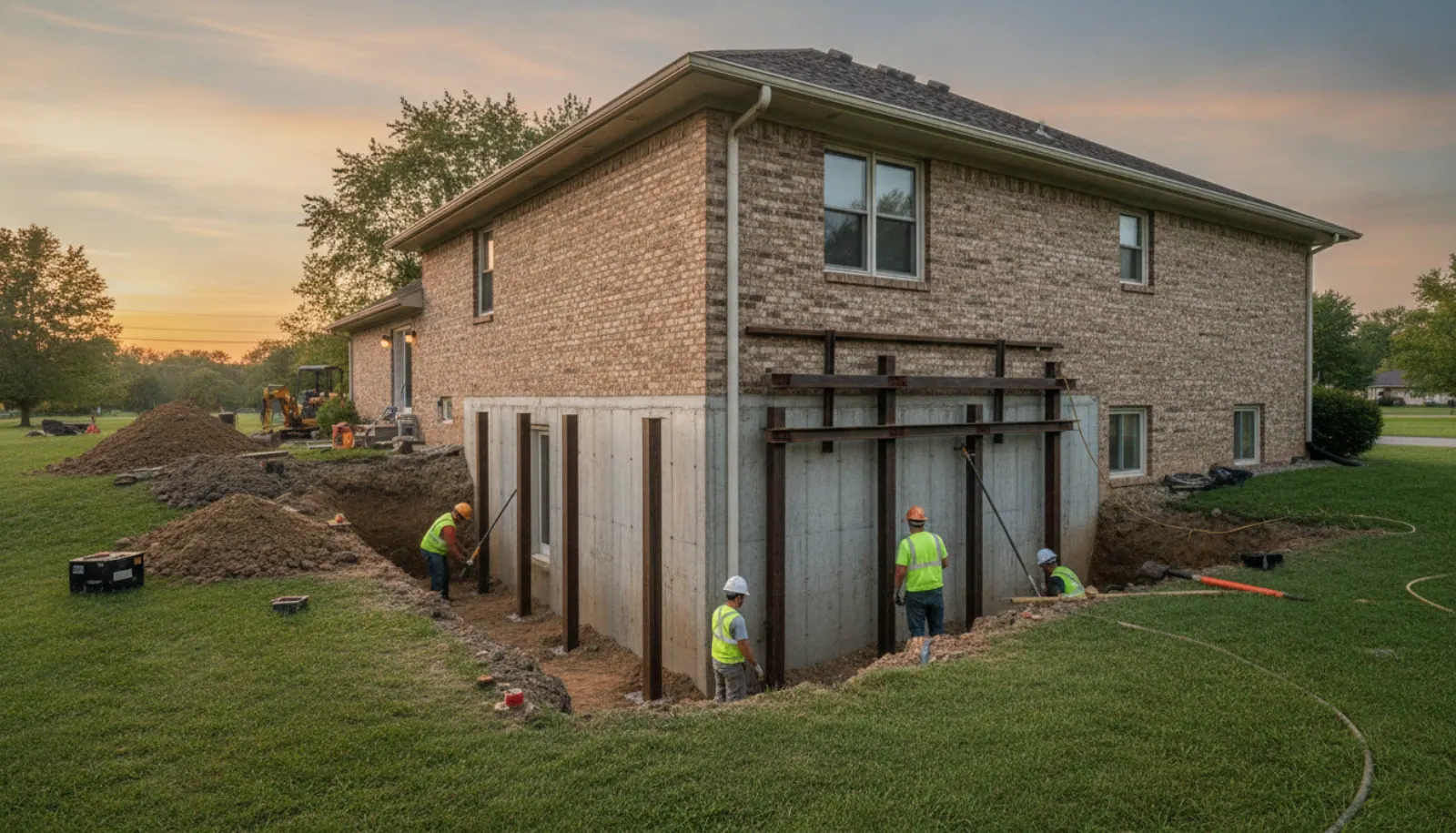
If soil is pushing the wall in, the wall is held in place before the crack is closed up.

Piers

If a corner has settled, steel piers are driven to firmer soil to hold it up.

Drainage

Less water in the soil means less push on the wall. Gutters, downspouts and grading are often part of the plan.

The contractor we connect you with should tell you which cause they found and why, not just patch the crack.

What it costs

The table shows typical ranges from published cost guides. They are not quotes. A stable crack that just needs repointing is a small job. A crack that comes with a bowing wall or a settled corner costs more, because the movement has to be stopped first. Your written estimate is the real number.

What to do before the inspection

Mark both ends

Of the crack with a pencil and the date.

Measure the width

At the widest point. A coin or a ruler in a photo works well.

Check again in a month

Cracks that grow tell a very different story than cracks that do not.

Look upstairs

Note any doors that stick or new drywall cracks above the same wall.

Look outside

See if the same crack shows on the outside, and where downspouts empty.

Frequently asked questions

Are stair-step cracks normal in an old house?

Thin, old stair-step cracks are common in older block basements in Toledo. They are not always a problem. The ones to worry about are wide, growing, leaking, or showing up with a wall that bows or a corner that dropped.

How wide is too wide?

A hairline crack you can barely fit a fingernail in is usually minor. A crack wider than about a quarter inch, or one where the blocks on each side no longer line up, should be looked at soon.

Can I fill the crack with mortar myself?

You can patch a thin, stable crack to keep out water and bugs. Do not patch a crack that is growing or a wall that is moving. A patch hides the clue an inspector needs to see.

Does a stair-step crack mean my foundation is sinking?

Not always. A crack that is wider at the top and runs down toward a corner often points to settling. A crack near the middle of a wall that bows in points to soil pushing from outside. The shape and where it is tell the story.

Will a home inspector flag a stair-step crack?

Usually, yes. Home inspectors often note these cracks and suggest a foundation contractor or engineer look closer. Having a written opinion and price ready can help the sale go smoothly.

Find out if the crack is still moving

A free inspection tells you if the crack is old and stable or a sign of a wall on the move. Call (419) 670-7969 or send the short form, and a local crew will call you back, usually the same day. The price comes in writing, and the choice is yours.

(419) 670-7969 Free inspection