Why floors slope in Toledo homes
In most Toledo homes, the first floor sits on wood joists. Those joists rest on the basement walls at the edges and on a main beam down the middle. The beam is held up by posts on the basement floor. A floor can slope if any of those parts move.
Old framing. Census data shows about 58 percent of Toledo homes were built before 1960, and about 31 percent before 1940. Wood that old may have been cut, notched or drilled for pipes and wires over the years. Joists can sag, and old beams can bend under weight they were never meant to carry.
Damp basements. USDA lists a water table in local Toledo clay soils close to the surface from November through May. Basements that stay damp for months can rot the bottom of wood posts and the wood sill that sits on top of the walls. When a post or sill rots, the floor above drops.
Posts that sink. Many older basements have posts set on a thin floor slab or a small pad. Over time, a post can push down into the floor and the soil under it. The floor above dips right over that post.
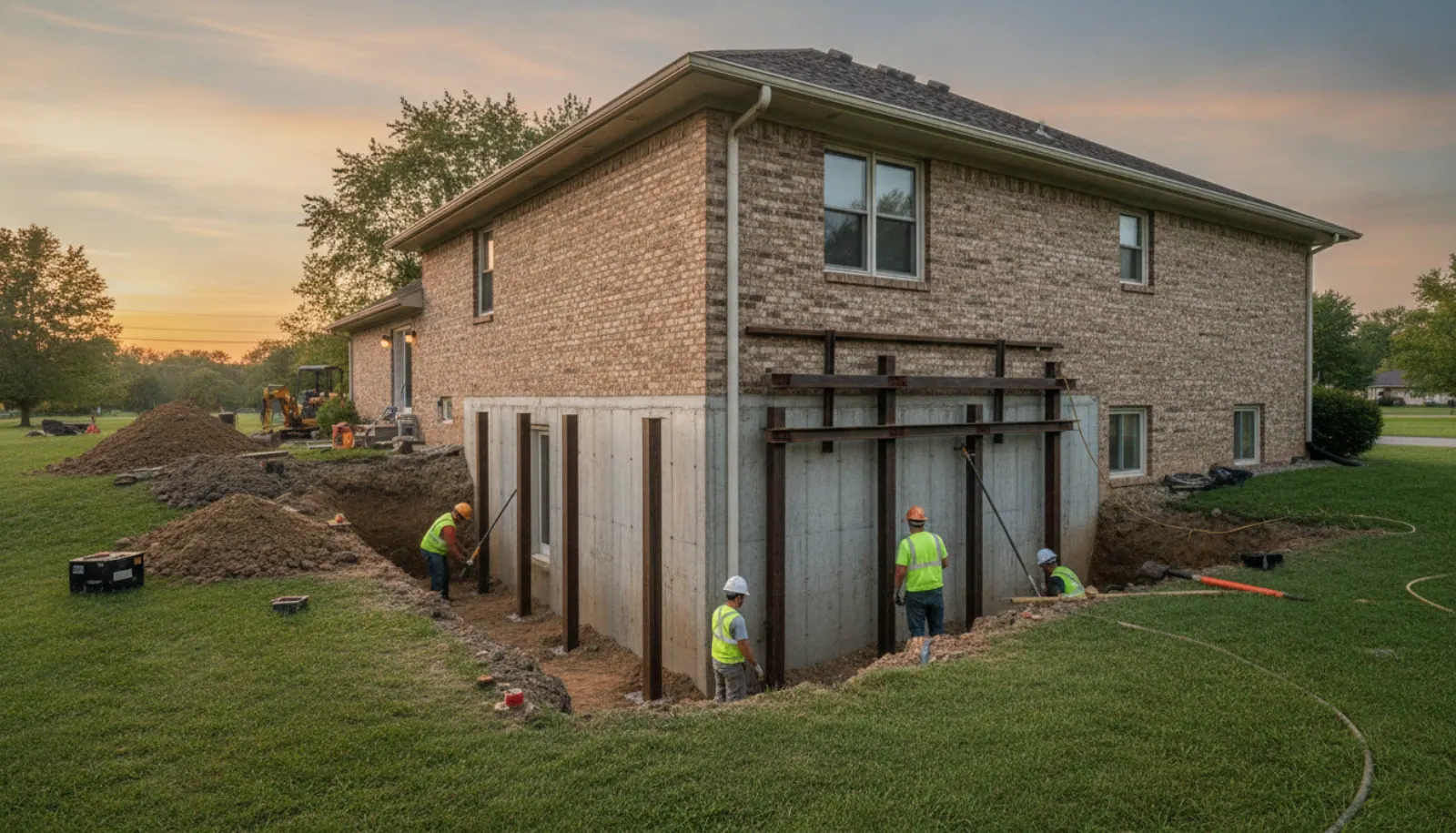
Foundation movement. If a basement wall bows in or a corner settles, the floor near that wall drops with it. This kind of slope runs toward an outside wall and usually comes with cracks in the basement wall below.