Why houses settle in Toledo
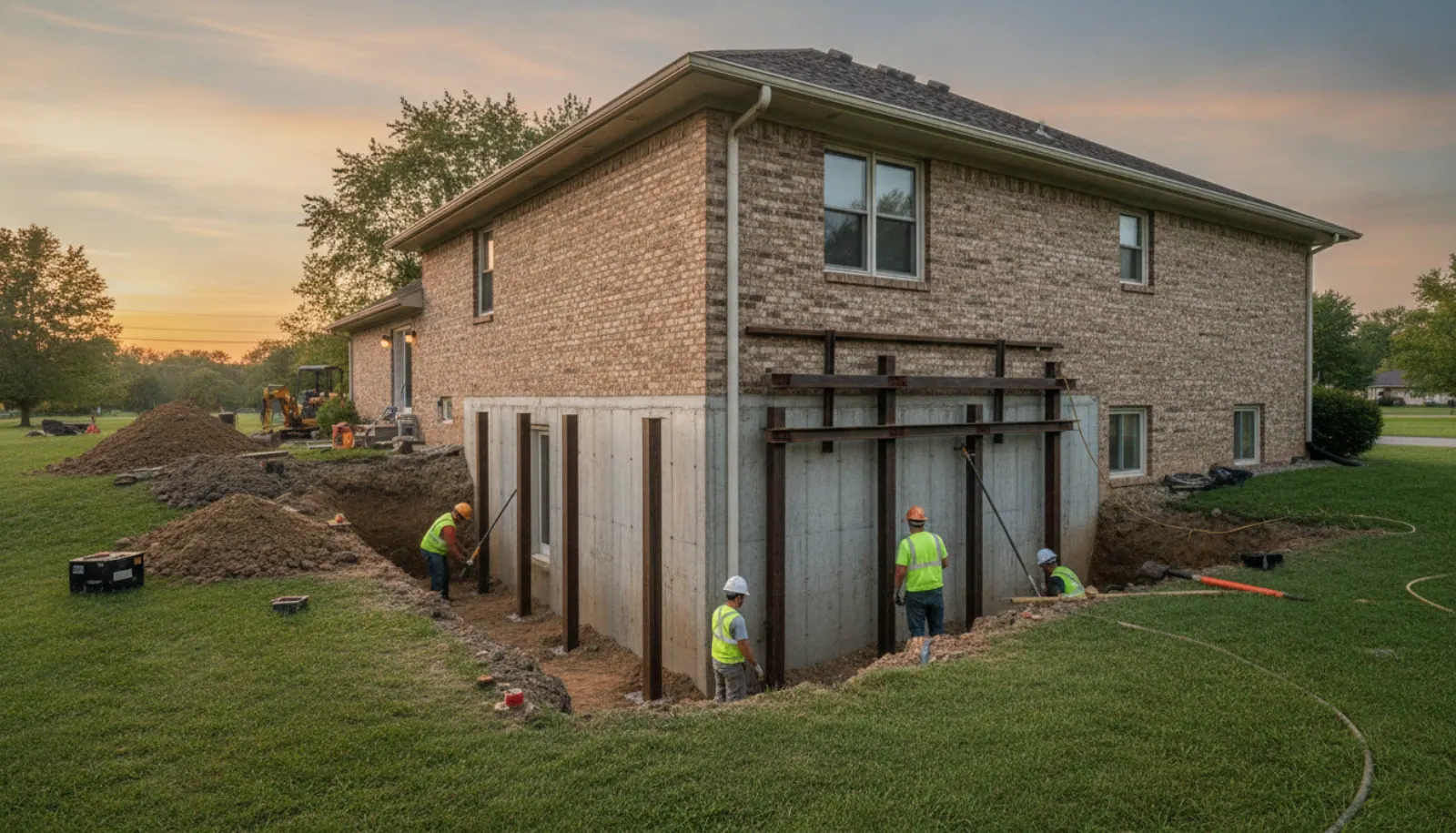
A house sits on footings, which spread its weight onto the soil. If the soil under one footing gets weaker or softer than the rest, that part of the house sinks.
Much of Toledo sits on old lake-bed clay. The land was the bed of glacial Lake Maumee and later the Great Black Swamp. USDA calls the common Toledo soil very poorly drained with slow permeability. Clay that stays soaked is softer than dry clay. When one corner gets much wetter than the others, it can sink more.
That is why water is so often part of the story. A downspout dumping at one corner, a yard that slopes toward the house, or a leaking pipe under the floor can soak the soil under one footing for years.
West of the city, the soil changes. In the Oak Openings, which reaches into Sylvania and Holland, sandy beach ridges sit on top of clay. A house can sit partly on sand and partly on clay, and the two parts can settle at different rates.
Lucas County requires footings at least 36 inches deep, below the frost line. Many porches, steps and older additions were built with smaller or shallower footings. They often sink or pull away on their own while the main house stays put.
The houses are old, too. About 58 percent of Toledo homes were built before 1960. In a house that old, the first years of settling ended long ago. New settling now means something changed.